

The silver snarling trum.., p.1
The Silver Snarling Trumpet, page 1


Copyright © 2024 by Maureen Hunter, Trustee of the Robert and Maureen Hunter Revocable Trust, as Amended and Restated in 2014
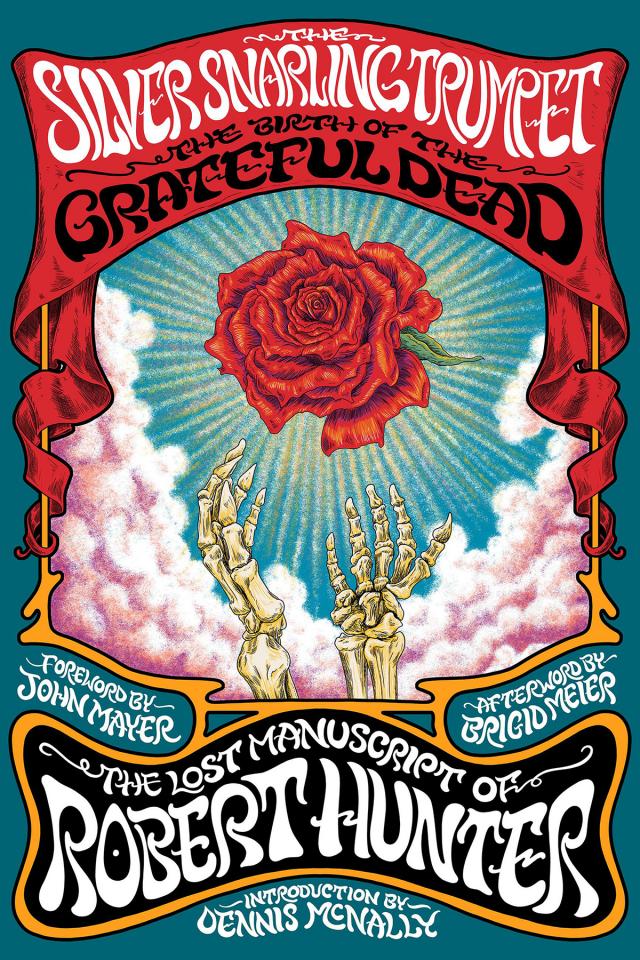
Cover design and illustration by Nathaniel Deas
Cover copyright © 2024 by Hachette Book Group, Inc.
Hachette Book Group supports the right to free expression and the value of copyright. The purpose of copyright is to encourage writers and artists to produce the creative works that enrich our culture.
The scanning, uploading, and distribution of this book without permission is a theft of the author’s intellectual property. If you would like permission to use material from the book (other than for review purposes), please contact permissions@hbgusa.com. Thank you for your support of the author’s rights.
Hachette Books
Hachette Book Group
1290 Avenue of the Americas
New York, NY 10104
HachetteBooks.com
Twitter.com/HachetteBooks
Instagram.com/HachetteBooks
First Edition: October 2024
Published by Hachette Books, an imprint of Hachette Book Group, Inc. The Hachette Books name and logo is a trademark of the Hachette Book Group.
The Hachette Speakers Bureau provides a wide range of authors for speaking events. To find out more, go to hachettespeakersbureau.com or email HachetteSpeakers@hbgusa.com.
Books by Hachette Books may be purchased in bulk for business, educational, or promotional use. For information, please contact your local bookseller or Hachette Book Group Special Markets Department at special.markets@hbgusa.com.
The publisher is not responsible for websites (or their content) that are not owned by the publisher.
Print book interior design by Amy Quinn.
Library of Congress Control Number: 2024939750
ISBNs: 978-0-306-83515-5 (hardcover), 978-0-306-83517-9 (ebook)
E3-20240813-JV-NF-ORI
CONTENTS
Cover
Title Page
Copyright
Acknowledgments
Foreword by John Mayer
Introduction by Dennis McNally
Author’s Note
Dedication
Preface
Chapter I
Chapter II
Chapter III
Chapter IV
Chapter V
Chapter VI
Chapter VII
Chapter VIII
Chapter IX
Chapter X
Chapter XI
Chapter XII
Chapter XIII
Discover More
Afterword by Brigid Meier
ACKNOWLEDGMENTS
ROBERT STARTED WRITING THE SILVER SNARLING TRUMPET LATE in his nineteenth year and into his twenties, he often spoke about those formative years in Palo Alto and the young people you’ll meet in this book with great fondness.
When we married in 1982 and soon after moved house, Robert put a bunch of his writings (including the original manuscript for this book) into a large trunk and into our storage unit not to be rediscovered until last year, when interest in making a film about that period came to my attention. It occurred to me that perhaps The Silver Snarling Trumpet’s time had come to be shared.
It’s a genuine piece of history and a glimpse into a time period that would set the foundations for everything that followed. What struck me when reading the book is how cognizant these young people were that they were a part of something important, a cultural shift that was fast approaching—the crossroads between the beatnik generation and the birth of the burgeoning San Francisco music scene, an exciting time that Robert faithfully documented in these pages. It makes me very happy that it is now being published and enjoyed.
I would like to thank Brant Rumble and all the wonderful people at Hachette Books, Mary Ann Naples, Michelle Aielli, Michael Barrs, Amanda Kain, Sharon Kunz, Monica Oluwek, Cisca Schreefel, Amy Quinn, and Mollie Weisenfeld.
Special thanks to Steve Martin, Jeff Rosen, and David Rosenthal, who made this happen, and to John Mayer, Dennis McNally, and my dearest friend Brigid Meier for writing the pieces for the book.
Maureen Hunter
WHEN I WAS ASKED TO WRITE A FOREWORD TO A newly unearthed manuscript written by Robert Hunter, I immediately said yes. I knew that anything that came from his mind would interest me. Looking back on it, I suppose I was semiprepared to read something abstract and to search for the messages where they might be hiding. After all, historically, lost works of art tend to help explain why they might have been shelved in the first place. Time bears out the best of the unpublished, and, eventually, all that remains are high hopes and some assemblages of fits and starts.
It was around the very first page of this book that I realized that was not the case, and that I was holding one of the most important documents in Robert Hunter’s—and Grateful Dead’s—history. A lost box of film that, when developed, would reveal some of the most striking images you’ve ever seen, the kind that make you go slack-jawed and your heart race. What you’re holding in your hands is not a recollection or a reconstruction. It is not a sifting through the sands of time to reach the long out of touch; it is a journal of the coming of age of one of the greatest lyricists the modern music world has ever known, and, at times, his friend, a young man known simply as “Jerry.” It is also a stark, deeply sensory account of the early 1960s that is brought to life so tactilely that, at times, it’s hard to believe you’re not peering through a viewfinder.
History can only hold on to so much, and so it’s usually the big shiny things that fit neatly into easily digestible timelines that it recalls, when all the while we know there was more—the seemingly insignificant car rides and the late-night talks and the countless times when nothing happened, except the slow and steady internal formation of a brilliance that would go on to change the world. We also know that these memories belong solemnly to the artists, until they drift away from their own grasp as well.
For decades, Deadheads have considered the story told, at least by its originators. Their interpretation might evolve, but the words in the story, they’ve dried on the page. Passionate followers of this music have learned to make the most of what was so generously given, reconstructing the dream through music, lyrics, photos, and anecdotes. Through the collective work of millions, they have pieced together a scale model of a dream that, in reality, was shared by six or eight or ten young men beginning in the early 1960s.
Our dreams of this music were Robert Hunter’s life experiences, before all the years combined, as he would later go on to write. They are both milestone and mundane, and sometimes we the reader take on the task of separating one from the other, and perhaps seeing the big in the small, and vice versa. Where nothing happens, everything happens within; there is no moment too oblique, no sense too slight, not to investigate with the sharp and playful poetic mind that we would come to know years later through Hunter’s lyrics. It’s always surprising to me that even while the timbre is developing, the artistic voice is always there, no matter how early you go back. These stories are spoken in a very familiar rhythm—the swirl of the fingerprint is already deeply set.
And so, as keepers of the story, both young and old, whether Deadheads with fifteen years under their belt (me) or sixty, this is something new to us all: the great reveal of the early days of what would become the duo of Robert Hunter and Jerry Garcia, arguably the greatest songbook in American history, and a band called Grateful Dead. But all icons begin as people, and all art begins as their sensation of the world around them, and this is a deeply personal account of both. We have always considered ourselves lucky to be given so much through the words and music, and today, we have gotten even luckier. This is a gift—a rare, special, and important hand-drawn blueprint by the architect of the dream himself. Discovering just a page of this book would have been enough to rejoice over. That we have hundreds is a reality I’m still trying to get my head around. Time itself has revealed something truly magnificent, and there is beauty to be found on every page.
AS THE GRATEFUL DEAD’S WIZARDLY, ICONIC LYRICIST, Robert Hunter created a mythic universe of stories in songs, an omni-dimensional America that included mountains, seas, deserts, and stars in their heavens. It was a nation of no fixed era or boundaries, populated by ramblers, gamblers, saints, wastrels, rogues, and visionaries (sometimes all in one character), cats (real and China), alligators, wolves, coal miners, judges, angels, fairies, locomotive engineers, soldiers, sailors, and the dying… among other things.
In 1962, at the age of twenty, he began work on a novel, a roman à clef titled The Silver Snarling Trumpet. In hindsight, it was a dry run, what his friend Brigid Meier called a launching pad for his life in words, although the form would change with practice. Later, he would observe that the subculture that would become known as the Grateful Dead began as a cluster of relationships long before there was a band; Trumpet is the story of that earliest community. As Dead Heads read this tale, they will come to realize that it is also the two-hundred-page version of the masterpiece lyric Hunter fashioned in the 1990s, “Days Between.”
Robert Hunter was born Robert Burns in 1941 near San Luis Obispo, California. His family was sundered by his father’s alcoholism, desertion, and a subsequent divorce, and Robert spent several years in a string of foster homes. The result, as he later put it, was that he “had probably more than the usual load of sensitive bullshit as a young man.”
His life improved when his mother married Norma n Hunter, a publishing executive. Robert adopted his stepfather’s surname and learned from him: Norman would see the phrase “merciless north” in an essay and vividly mark Robert’s life by hurling the paper across the room with the comment, “I don’t ever want to see you attributing human attributes to nature again.” Hunter laughed. “He busted me on the pathetic fallacy, which is the absolute sine qua non of the poor writer.”
The immediate result of his improved writing was an F on a book report because the teacher said it was far too good for a seventh grader. Longer term, it was surely not accidental that just around this time, he began to write his first novel, a fifty-page handwritten fairy tale. He stuck with that self-image. Though he would concede as an adult that his gifts as a writer were more suited to lyrics than to prose, he would maintain that “I have a novelist’s mentality.” He began playing music at age nine, when his grandmother gave him a Hawaiian steel guitar, and in his teens, he picked up cello, violin, and trumpet.
The Hunters eventually settled in Palo Alto, where Robert attended high school for the tenth and eleventh grades. He joined the band and orchestra, the Free Thinkers Club (“the first I’d heard of atheism”), and the wrestling team, which gave him regular-guy credentials. In 1957, the family moved to Stamford, Connecticut, for his senior year and upended his circumstances. He resumed life as an outsider in a conservative, socially restrictive world, enlivened only by his first band, an old-fashioned combination of Dixieland and rock and roll called the Crescents, for which he played trumpet.
After a semester at the University of Connecticut in the fall of 1958, useful only for learning about Pete Seeger and folk music, he returned to Palo Alto, was jilted by an old flame, enlisted in the National Guard, completed his initial tour of duty, and returned to Palo Alto in March 1961. Soon after his arrival, he attended a production of Damn Yankees at the Commedia Dell’arte there and an old friend introduced him to the volunteer lighting technician, a young proto-beatnik named Jerry Garcia. A day or two later, they met again at the local coffeehouse, Saint Michael’s Alley. Along with Garcia’s friend Alan Trist, a student from England taking a gap year before university, they began a conversation that would last their lifetimes.
Though he was only eighteen when they met, Garcia clearly had an outsize, charismatic personality that made him the center of their little group. A streetwise, intuitively nonconformist San Franciscan who had adopted Kerouac’s On the Road as a life guide, he had talent as a painter, having studied with the well-known Beat assemblage artist Wally Hedrick at the San Francisco Art Institute, but he had shifted his focus to playing music. “He played the guitar anywhere from twenty-four to thirty-eight hours a day,” Hunter wrote, “which would tend to be unnerving even if he were Segovia. However, he was not Segovia; he was Jerry. And the very act of being Jerry was, in his estimation, an excuse for almost anything.”
Their group was rounded out by Trist, an eccentric fellow named Willy Legate, and a high school student named Barbara “Brigid” Meier.
Alan would later remark that “like any proper Englishman, I was a bit of a renegade.” A literary intellectual who was up on Rimbaud, Dylan Thomas, and the Beat bible, Don Allen’s New American Poetry, Alan had even visited the legendary Beat Hotel in Paris. He was enthusiastic, stylish, and catalytic. Hunter would recall the thrill of absorbing “Howl” for the first time at Alan’s, thinking “someone was going to bust in and arrest me for reading it.”
Willy had a room that, along with his cigarette stash, he frequently shared with Hunter and Garcia. Legate was tall and stooped, with an enormous head, a bulging forehead, and thick glasses. Raised in Arkansas, he’d begun reading up on psychic research, the Rosicrucians, the theosophist Annie Besant, and yoga in high school, and while in college in 1959, he learned how to cadge vials of LSD from the manufacturer.
He never, wrote Hunter, “said a great deal, or if he did, it was mainly incomprehensible.” He “could always be found at one extreme pole or the other, politically, mentally, and Willy-wise.” Mostly, he responded to questions with “Won’t tell ya.” Years later, Garcia reflected that “we all learned how to think a certain kind of way from Willy… things that come out of sequence—nonlinear, Zen, synchronistic thinking. How to think funny, the cosmic laugh.” Hunter concluded, “Willy was the kind of person who somehow made you wonder just who you were, where you were going, and if maybe he didn’t have the right idea after all.”
Brigid Meier was their precocious younger sister, beautiful and at least as well read as the rest—and eager to learn more. A budding intellectual, artist, and poet, she had, as she recently wrote, “a healthy dose of rabid anti-authoritarianism combined with a sense of the absurd; we knew we didn’t belong to the dominant culture of consumerism and conformity.” In 1962, she wrote a poem about them all; she was “in rapture of the thing / where we are all in love / with Life / and each other.” She was their spiritual glue.
Finally, there was Hunter, who Brigid’s poem called “the blind man” with his glasses, the observer. Garcia would assess Hunter’s depiction of people in Trumpet as generally quite accurate, except for his portrayal of himself, which he tends to omit. His subject is their scene, which they were all preternaturally aware of as being special. They roamed from their “library,” Kepler’s Books, where they read and talked (and where the kindly owner protected them despite their penury), to their hangout at the coffeehouse, to the Felliniesque parties at places like the boardinghouse known as the Chateau.
It was a scene, Hunter recorded, where “love was the essence of it, and a sense of kinship touched each of us… though it is the sort of thing that cannot quite withstand the harsh light of scrutiny.” Alan saw it as well. “And then there’s a love thing,” he added. “We all feel it sometimes, but we’re afraid to say it, and sometimes we wish we’d said it when it’s too late to. When you suddenly realize how close you came to losing your last chance, or how suddenly you might lose it, it’s time to start reworking your values.”
One reason for their intimate connection was the car accident a month before that had blown Garcia out of his shoes and through the windshield, cost Alan an inch of height through a back injury, and killed their friend Paul Speegle, whose art had impressed them.
“That’s how this group really began… I mean, as more than a social clique,” Hunter recorded Jerry as saying. “A lot of us seemed to realize this and it drew us closer together. It all happened just before you [Hunter] came around. You missed the game, but you got the score, though. That’s the thing that counts in the end.” The accident, and the fact that he had survived—and that Speegle had not—made Garcia “realize that I could never be sure where I’d be tomorrow, or even if I’d be alive. That’s why I’m living like I am now, doing what I want to do instead of working away at some job to establish the security for a tomorrow I might never be around to see.”
Their attitudes were not at all political—“If the truth be known,” Hunter wrote, “with a few exceptions (notably Willy), our collective political knowledge and views were next to nonexistent. Besides being positively anti-HUAC (as who wasn’t), anti-bomb (we had our own personal interests to consider), and anti–present administration (as who, in the history of mankind, hasn’t been?), we more or less didn’t give a collective damn about such goings-on in general.”
Instead, they were consciously anti-consumer. Hunter ranted on the subject: “Daddy, security blanket, and God; an air-conditioned, employer-employee relationshipped, wage-scaled holy trinity with 5 percent of your yearly earnings in the form of a Christmas Bonus masquerading as the Virgin Mary.”
“We were different from other human creatures and knew it; reveled in it.” Hunter depicted them singing as they strolled down the street, which would lead people to “avert their eyes as though afraid to admit the presence of such an enormous breach of etiquette… the same people who would pause for minutes to observe the twisted metal and broken glass of an automobile accident. But then, an auto wreck was more socially acceptable than we were.”
Their scene was a part of the bridge from Beat to hippie. As such, Hunter wrote later, Trumpet was a “representative artifact of the dawn of the sixties.” They knew something was happening, but they didn’t yet know quite what it was… so they waited. “While we were waiting, we learned one another, for this was a time when all guards were down and pretention was ridiculous on its face, except in jest. Guards were down, but never the faith of the true believer… at least not in the conviction that ‘it’ would one day walk through that very door.”






